Coldwell Banker Island Properties Top Producers

COLDWELL BANKER ISLAND PROPERTIES 2010 TOP MAUI REAL ESTATE PRODUCERS

Coldwell Banker Island Properties realtors completed stellar sales production for the year 2010 of over $571 million dollars in closed sales transactions, making CBIP the #1 Real Estate Firm on Maui for the 16th straight year in a row.  Closed sales transactions increased 19.4% from 2009, CBIP’s agents represent both buyers and sellers in Maui real estate transactions.  But to CBIP and myself, it is not about the numbers, it is about creating and fostering relationships built on trust, so that our/my real estate clients know they can pick up the phone and rely on me.  As always, it is a privilege and honor serving our friends and clients who we call our Maui ohana!  One of the toughest things I have encountered when I represent a client and friend as their selling agent when they are selling their Maui property and moving off island, is a sense of loss when the transaction has closed.  Although I know the client is selling because they want to move off island for various reasons, I know that I am going to miss their presence on this island that we call home.

To all our friends and ohana, we say “a hui hou” (until we meet again).


Michele Muir White R(S), ABR, SFR
Coldwell Banker Island Properties
Wailea Gateway
808.298.8448
[email protected]
Access to Maui MLS:
www.MauiRealEstateGuru.com


Big Island Homeowners May Mediate Foreclosure Action Filed in Court

The Hawaii Supreme Court has issued an order modifying and extending the Third Circuit’s residential foreclosure mediation pilot project for another year. The project’s end date will be March 31, 2012.  The goal of the project is to give Big Island homeowners who have been served with a foreclosure action the opportunity to participate in mediation with the lender and a trained mediator before the case is heard by a judge.
Third Circuit is implementing certain changes to enhance the project’s effectiveness for the second year.  One of the changes makes filing and serving a Foreclosure Mediation Notice and Request Form – along with the complaint – mandatory for the lender’s attorney, or plaintiff. Participation in mediation for the eligible borrower, or defendant, however, is still optional.  A plaintiff who files a request for a default judgment because the defendant did not show up on the court date must also file a Certificate of Service verifying that the Foreclosure Mediation Notice and Request Form were served upon the defendant.  In deciding whether the project should be extended and how it may be modified, the Supreme Court considered information from several sources, including the Foreclosure Mediation Pilot Project Report and feedback from the Hawaii Access to Justice Commission. Both documents are available on the Hawaii State Judiciary’s website.

For more information about the Third Circuit’s residential foreclosure mediation pilot project, call 808-961-7435.


February 2011 Sales Stats

Maui’s residential sales held steady at 57 homes sold, while condo sales rose to 95 units sold. Land sales came in at 7 lots sold.

February’s Median sales prices declined from January’s $495,415 to
$440,000 while condo median prices rose substantially to $376,000. Land median price was $282,500.

Days on Market for Residential homes = 149 DOM, Condos = 196 DOM, Land = 180 DOM.

Year to Date: Comparing January 2011 to January 2010
Residential unit sales rose (+9%), average sold price = $706,134 (-1%), median price = $450,000 (-7%) and total dollar volume sold = $78,380,919 (+7%).

Condo unit sales increased (+7%), average sold price = $513,007 (-24%), median price = $332,500 (-19%). Total Condo dollar volume sold = $93,367,305 (-19%).

Land Lot sales are such a small sampling that statistics in this property class are not necessarily reliable indicators. Land lot sales increased (-16%), average sold price = $814,739 (+73%), median price = $291,250 (-35%), Total dollar volume = $13,035,826 (+46%).

Total sales for immediately past 12 months: Residential = 821, Condo = 1,161, Land = 124.

Sellers still need to sharpen their pencils because of the high percentage of short sale and bank owned properties for sale. There is still ample opportunity to reach out to those investor/buyers who are on island with cash. For all of your Maui real estate needs, contact Michele Muir White R(S), ABR, SFR , 808.298.8448, [email protected]   To access the Maui MLS:  www.MauiRealEstateGuru.com


January 2011 month end stats

53 homes sold during the first month of 2011 at a median price of $507,308. This compares to 48 sold in January 2010 at a median of $464,500. This equates to a 10% increase in sales volume when comparing this January to the same time last year.

87 condos sold in January 2011 at a median price of $295,000. This compares to 75 sold in January 2010 at a median of $404,000. This represents a 16% increase in volume when compared January 2010.

9 parcels of land sold in January at a median price of $300,000. This compares to 12 sales at a median $516,300. This represents a 25% decrease in volume when compared to January 2010.

As we progess into the new year, we continue to see the impact of REO (bank owned properties) and short sales on the Maui Real Estate market. There were 48 REO closes and 11 short sale closes in January of 2011. This compares to 17 bank owned and 7 short sale closes during the same time last year. That reflects a 282% increase in bank owned closes and 57% increase in short sale closes. 47% of all home sales were REOs or short sales. 37% of all condos sales were short sales or REOs. 22% of the land sales were bank owned.

January appears to have been a fair month for sales. While land sales continue to languish, home and condo sales saw a nice little bleep above what we saw last January.  Last January, sales dipped a little from the previous months due to what I would call the tax credit hangover.

Home medians appear to be up by a healthy margin. This increase has occurred with no clear indication that home values are increasing on the island. I suggest that this is a result of increased sales activity in higher price ranges at least for the last month. The condo median for January is 27% lower than what we saw in January of last year. While it is evident that condo values have decreased over that time frame, I would surmise that the drastic shift in median is weighted heavily by more activity at lower price points in the market. There is a lot of low priced short sale and REO activity closing below $300,000, and that is trending the median lower.

Finally, the REO numbers for January were the highest we have seen to date. The fact that 42% of all home sales were bank owned is noteworthy. It is a particularly telling when you consider that only 9% of the active and pending inventory of homes is owned by banks. In other words, REO transactions are being absorbed at much higher rates than the rest of the market.

What does this all mean for buyers and sellers? Sellers might want to read the paragraph directly above twice. Bank owned properties are seeing a disproportionate share of the market. If there are a signifcant number of bank owned comparables to your market, you will need to price accordingly. Buyers are going to continue to find good opportunities in this market both among bank owned, short sale and well priced conventional inventory. That being said, buyers will also find that some of the better priced opportunities are quite competitive. Buyers may encounter bidding wars that drive sales prices above list prices.

Please contact Michele Muir White R(S), ABR, SFR, Coldwell Banker Island Properties, Wailea Gateway Office, 808.298.8448, [email protected] for your buying/selling questions, comments and particulars.  


A Guide to Appraisals

Here is some information that I found useful from RISMEDIA on Appraisals.

It’s easy to get confused and frustrated during the appraisal process when buying or selling a home. Because of this, the Appraisal Institute recently released tips for consumers, providing guidance for homeowners and buyers seeking to ensure their sales are completed in a timely manner.

The Appraisal Institute’s tips encourage homeowners and buyers to:

• Understand the role of appraisals.
• Make sure their lender hires a qualified appraiser (such as a designated SRA, SRPA or MAI member of the Appraisal Institute).
• Accompany the appraiser during the inspection of the property, if possible.
• Request a copy of the appraisal report from the lender.
• Examine the appraisal report and ask questions.
• Appeal the appraisal if appropriate.
• Ask the lender to order a second appraisal by a qualified and designated appraiser.
• File legitimate complaints with appropriate state board or professional appraisal organizations.

Appraisals are especially important because they are an objective and unbiased source of information. Unlike others involved in real estate transactions, the appraiser is an independent professional who performs a service for a fee rather than for a commission.”

Normal declines in the real estate market have led to increased caution by lenders. That caution has led to delays in completing some real estate transactions.

Michele Muir White R(S), ABR, SFR
Coldwell Banker Island Properties
Wailea Gateway Office
808.298.8448
[email protected]
Access Maui MLS @
www.MauiRealEstateGuru.com


Maui Real Estate Year End Stats

There have been 72 home sales for the month of December at a median price of $465,706.  As compared to 12/09 when 90 homes sold at a median of $477,000, this reflects a 20% drop in sales volume.

93 condos sold at a median of $352,000. This compares to December of 2009 totals of 81 condos sold at a median sales price of $399,000. This refelcts a 15% increase in sales volume.

There were 14 land sales at a median price of $394,850. This compares to the December 2009 totals of 11 sales at a median price of $420,000. This reflects a 27% increase in sales volume compared to 2009.

Bank owned (REO) properties and short sales remain a significant portion of Maui’s inventory and monthly sales. There were a total of 30 REO closes and 25 completed short sales last month. This compares to 45 bank owned closes and 15 short sales in December of 2009. Of all home sales, 39% were shorts or REOs. For condos, 27% of the sales were REOs or shorts. There were two bank owned land sales.

Even with last year’s first time home buyer tax credit, the condo market this year outperformed December of 2009.

Land sales were up, but still remain low overall. This is going to remain a slow market segment unless we start to see a big increase in really compelling opportunities. Financing for land remains difficult. Existing home costs are also comparatively low which may make new construction less attractive. Buyers who are looking to buy land and build will find better selection and more competitive pricing from home builders.

We are now officially in our traditional buyer’s season. There are some positive signs that indicate we may have a busy winter for real estate transactions. Visitor numbers are strong and Canadian buyers are continuing to see favorable exchange rates. Sellers should be mindful that this is a buyer’s market. Sellers that are having success are continuing to price properties at or below recent comparable sales. There is still a shadow inventory of foreclosures that have the potential to exert downward pressure on prices. Buyers who are patient are going to find some good opportunities in this market. But, buyers should not be complacent. Some of the better opportunities have been attracting multiple offers. Well priced properties can sell at or above list price. Buyers must be pre-qualified for lending.  A local Maui lender knows Maui’s market best. Cash is still king and cash buyers have an advantage in this market.

With help buying or selling Maui real estate, please contact Michele Muir White R(S), ABR, SFR, Coldwell Banker Island Properties, Wailea Gateway 808.298.8448   [email protected]


Hawaii Wildlife Fund

So, you want to get involved with protecting Hawaii’s native wildlife while you are visiting our beautiful island of Maui?  Here is information on the Hawaii Wildlife Fund and projects that it is involved in.  Have some real meaningful fun while you are visiting Maui.

HAWAI’I WILDLIFE FUND (HWF) is a non-profit organization dedicated to the preservation of Hawaii’s native wildlife through research, education and conservation. HWF’s team are educators, conservationists, researchers, naturalists, communities, volunteers and donors devoted to the preservation of Hawaii’s fragile marine ecosystem and inhabitants. We bring a variety of experiences together to serve a common goal.
Hawai’i Wildlife Fund leads research, monitoring and conservation efforts to help protect Hawai’i’s fragile marine ecosystem. Interested? Please email us at [email protected]. Mahalo!

RESEARCH PROJECTS
Hawksbill Sea Turtle Recovery Project
Hawaiian Monk Seal projects
Makai Watch

CONSERVATION PROJECTS
HWF Hawai’i Island Marine Debris Removal
Waiohinu – Ka`u Forest Reserve Protection
Managing Better Together Learning Network
Maui Reef Fund

Hawksbill Sea Turtle Recovery Project
HWF has been conducting research and monitoring the nesting activities of hawksbill sea turtles (Eretmochelys imbricata) since 1996. There are fewer than 100 adult female hawksbills known to nest in all of Hawai‘i. The species is listed as endangered in Hawai‘i and worldwide and needs our protection. Through conservation efforts, public awareness, beachfront lighting reductions, fence repairs, dune restoration, beach cleanups, radio and satellite telemetry, coordination of a Turtle Watch program, and determining in-water distribution and abundance, HWF is helping to preserve hawksbills and their nesting habitats.
VOLUNTEER WITH HWF

Hawaiian Monk Seal projects
From 1996 to 2007, HWF voluntarily coordinated the Monk Seal Watch on Maui, educating the public and protecting monk seal “haulouts”. After one year of service as HWF’s Monk Seal Watch Coordinator, Nicole Davis was hired through the National Marine Fisheries Service to continue this work with federal funding and to coordinate strandings on Maui. Volunteers with the Monk Seal Watch create a “safety zone” around hauled out seals, marking the area with yellow tape and standing guard to ensure the animals are not disturbed.
SEALS

Seal Research:
HWF is currently assisting National Marine Fisheries Service in establishing a Main Hawaiian Islands photo ID catalogue.
HWF’s co-founder, Bill Gilmartin, coordinated the relocation of aggressive male monk seals from the Northwestern Islands to the Main Hawaiian Islands in an effort to reduce the “mobbing” of females by males during breeding.
HWF conducted monk seal research on Midway Atoll for three years in the Northwest Hawaiian Islands. The resulting data are used by the National Marine Fisheries Service to assist in the recovery of this unique and endangered species.

Contact HWF:
Phone
808.280.8124

Email
[email protected]

Website
www.wildhawaii.org


http://www.wildhawaii.org/projects.html#recovery


Annual Homeowner Insurance Checkup

Homeowners Insurance: Time for an Annual Check-Up
By: G. M. Filisko

Published: August 28, 2009 (Realtor Magazine)

An annual check-up on your homeowners insurance can result in a healthier policy and a healthier pocketbook.

What type of coverage do I have?
The most effective type of coverage is known as “replacement cost,” which covers, up to your policy limits, what it would take today to rebuild your house and restore your belongings, says Jerry Oshinsky, a partner at Jenner & Block in Los Angeles who has represented homeowners in litigation against insurers.

“Extended” replacement cost coverage provides protection to your policy limit, say $500,000, and then perhaps another 20% of the cost after that. Percentages vary, but in this example you could recoup up to $600,000 on a $500,000 policy, assuming your losses reach that high. Extended coverage can compensate for any unanticipated expenses like spikes in construction costs between policy renewals. Now harder to find due to the industry shift toward extended replacement coverage, “full” or “guaranteed” replacement coverage covers an entire claim regardless of policy limits.

A less attractive alternative is “actual cash value” coverage that usually takes into account depreciation, the decrease in value due to age and wear. With this type of policy, the $2,000 flat-screen TV you bought two years ago will be worth hundreds of dollars less today in the eyes of your claims adjuster. Some brokers favor replacement cost coverage unless you can save at least 25% on the premium for going with actual cash value coverage instead.

Even if you have replacement cost protection for your dwelling and personal property, don’t assume everything is covered. Structures other than your home on your property—such as a detached garage or swimming pool—require separate coverage. So too do luxury items like jewelry, watches, and furs if you want full replacement cost because reimbursement for those items is typically capped.

How much coverage do I really need?
OK, now that you’re clear on what type of policy you have, you need to figure out how much policy you truly require in dollar terms. Let’s say you purchased your home five years ago and insured it for $200,000. Today, it’s worth $225,000. Simply increasing your coverage to $225,000 may nonetheless leave you underinsured. Here’s why.

The key to determining how much dwelling coverage you need isn’t the value of your home but the money you’d have to pay to rebuild it from scratch, says Carlos Aguirre, an agent for Liberty Mutual Insurance in Arlington, Texas. Call your local contractors’ or homebuilders’ association and inquire about the average per-square-foot construction cost in your area. If it’s $150 and your home is 2,000 square feet, then you should be insured for $300,000.

There’s no rule of thumb for how much your homeowners insurance should cost. Insurers use numerous factors—age, education level, creditworthiness—to determine pricing, so the same policy could run you more than your neighbor. In recent years the average annual premium was $804. Oshinsky advises against scrimping on insurance because big increases in coverage probably cost less than you’d think. He recently purchased a liability policy that cost $250 for the first $1 million in coverage. Adding another $1 million increased his premiums only $12.50 more.

How can I lower my premiums?
The higher your deductible, the amount you pay out of pocket before coverage kicks in, the lower your premium. Landing on the appropriate deductible level requires remembering that insurance should cover major calamities, not minor incidents, says Foley, the independent insurance broker. Most homeowners should be able to absorb modest losses like a broken window pane or a hole in the drywall without filing claims. If you can, then you’re wasting money with a $250 deductible.

Foley’s rule: If you’re a first-time homeowner and don’t have a lot of savings, moving up to a $500 deductible will probably stretch your budget. However, if you live in a ritzy home and drive an expensive car, then you should be able to afford a $1,000 deductible.

Every major insurer offers discounts to various groups, such as university employees or firefighters. Figure about 5%. Ask which affiliations would entitle you to a discount and how much. If an AARP membership would result in a $50 savings, pay the $16 dues and pocket the $36 difference. Many insurers also offer discounts ranging from 1% to 10% or more for installing protective devices like alarms and deadbolt locks, for going claim-free for an extended period, or for insuring both your car and your home with the same carrier.

Maui insurance considerations:

Is your property in a flood zone?
If your home is a condo, most likely you will have coverage on the exterior of the building under the homeowner’s association’s master policy?  You should review the association’s policy to determine what additional insurance coverage you may want.  Also, if you are renting your single-family home or condo, you may have additional insurance considerations.
Earthquake and hurricane insurance coverage is expensive. Weigh the cost/deductibles with your insurance representative.
Your lender may also have certain minimum property insurance requirements.

Michele Muir White R(S), ABR, SFR
Coldwell Banker Island Properties
Wailea Gateway Office
808.298.8448
[email protected]
https://www.MauiRealEstateGuru.com


November 2010 Maui Real Estate Stats

There have been 58 residential home sales reported for November 2010 at a median sales price of $445,000. This compares to November 2009 when we saw 67 sales at a median of $465,000. This represents a 13% decrease in sales from this year to November 2009.

166 condos sold at a median price of $349,900 last month. This compares to 70 condos sold November 2009 at a median of $399,000. This is a 6% decrease in sales between this year and last year.

Land sales totaled 6 at a median price of $362,500. Compared with November of 2009, there was a comparatively strong 17 total sales at a median of $455,000. This translates to a 65 % decrease when comparing sales from this November to November 2009.

Bank owned properties and short sales constitute a significant part of Maui’s inventory of properties for sale and an even higher percentage of closed sales. 28 bank owned properties sold and 20 short sales closed in November 2010. Almost 45% of all home sales were either bank owned or short sale transactions last month. 33% of the condo transactions were short sales or foreclosures. There were no land sales that were short sales or foreclosures. These numbers continue to track what we have been seeing over the previous few months. Some lenders are putting a fair number of bank owned properties that were on hold back on the market.

It will be interesting to see how the results from our winter season, as we are approaching the start of Maui’s traditional buyer’s season. There are a couple of factors that suggest we may see an increase in buyer activity. The Canadian dollar is almost at par with the U.S. dollar. Canadian second home buyer activity typically surges under this scenario. Overall visitor counts for this winter season are reported to be strong with island hotel and condo reservations at their third highest level historically. Generally, more visitors translate to more potential home buyers. On the other end of the spectrum, it appears that we will continue to see strong influence from bank owned and short sale transactions, as these transactions have moved prices down.

My advice to buyers and sellers remains unchanged. Sellers are still going to find a competitive marketplace. Exceptional properties may continue to draw a premium, but there is still a diverse inventory for buyers to choose from in most market segments. Bank owned listings will provide tough competition and force sellers to keep their eyes on comparable sales and keep their pencils sharp. Buyers can still find good opportunities well below peak market prices, but should expect that they may find competitive bidding on some of the better values in the market place. All buyers who require financing must get pre-approved prior to submitting contracts. Loans are available, but the process remains challenging even for well qualified buyers.

Contact me today with your questions or for assistance with buying or selling Maui Real Estate.
A hui hou,
Michele Muir White R(S), ABR, SFR
Coldwell Banker Island Properties
Wailea Gateway Office
808.298.8448
[email protected]
https://www.MauiRealEstateGuru.com


Whale Watching Season is Here

Maui Whale Watching Season (Dec 15 – Apr 15)

Humpback whales are gentle giants that are famous for their singing abilities, belting out seductive ballads to attract mates or to challenge other suitors. Their unique hunting skill, called “bubblenet” feeding, involves a group of Humpbacks working together to capture schools of herring. These marine mammals travel great distances to take advantage of the best breeding grounds and feeding spots. North Pacific Humpbacks, for example, mate and give birth in Hawaii and then travel to Alaska each summer to feed.
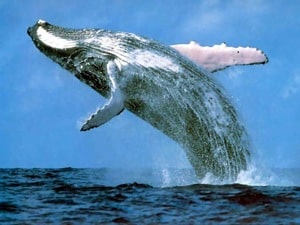
With its warm weather, crystal clear tropical waters, and gentle channel, Maui is one of the best places for whale watching in the entire world. Humpback whales come to Maui every winter to give birth to their calves, mate, and socialize. During their time on Maui, Humpback whales are highly active on the surface, dazzling whale watchers with breaches, spy hops, and tail lobbing. Maui visitors and locals are entertained by these above-water performances.

What are the whales that I’m seeing in Maui?
The whales are humpback whales, the fifth largest of the world’s whales. There are distinct populations of humpback whales in all of the world’s ocean basins. The population that comes to Maui spends summers feeding in the cool waters of the North Pacific in the nearshore waters of Southeast Alaska and through the Aleutian Islands into the Chukchi sea. They are also found as far south as the Farallon Islands off California.
In autumn, the whales migrate to warm water areas near the equator to mate and give birth. These areas include Hawaii, the islands south of Tokyo (Ogasawara and Okinawa Islands), the Commonwealth of the Northern Marinas, and the Soccoro Islands of Mexico. About 60% of these North Pacific humpback whales come to Hawaii.

Why should I go whalewatching when I’m visiting Maui? How does whalewatching compare on Maui versus the other Hawaiian Islands?
Maui is considered one of the world’s top whalewatch spots, famous for the proximity of whales to its shoreline and the large number of whales found here. Warm sunny weather, great visibility, and clear ocean waters add up to excellent conditions for whalewatching. More than 3,500 humpback whales come to Hawaii each winter to mate and give birth, making our state the nation’s primary mating and calving ground for these endangered animals. Maui is where most of these whales are found. They are attracted to the shallow seas off Maui’s south and western shores, the relative lack of predators and the warm water temperature.

How can I see whales from shore? If so, why should I go on a whalewatch?
The best way to spot whales is by scanning the horizon, looking for a blow…the misty vapor plume that results when a whale exhales at the surface. You can also look for large splashes caused by activities such as tail slapping, breaching or pectoral fin slapping. Another trick: look for a boat that is sitting still for no apparent reason. There’s likely to be a whale nearby.
Sometimes, the whales come very close to shore and you’ll have an excellent view. Most other times, you’ll find yourself longing for a closer look.  Whalewatch cruises offer you the opportunity to get closer to the whales. They offer thrills such as hearing a whale’s blow (an exhalation of 300 mph) or even seeing a whale swim beneath your boat. They are an opportunity to spend a two hours with an expert, to learn about these majestic animals as you watch their fascinating behaviors.

How close can we get to whales on a cruise?
Hawaii has the benefit of having some of the very best whale protection laws in the world. We all observe a “100 yard minimum” law, which states that whales within 100 yards cannot be approached by any means, including by boat, kayak, sailboard or even by swimming. Being wild animals, whales can approach us as they wish. It’s not uncommon for whales to come up alongside the boat, or may even swim beneath it. We call these events “whale muggings.” The boat captain can’t move the boat until the whale has departed!

Where do you go to see the whales? How far do you have to go?
Typically, you don’t have to travel by boat for more than ten minutes before you begin to see the humpback whales. We often see whales just minutes after leaving the harbor.

What’s the best time of day to see the whales? When are they most active?
Based on two decades of experience with whalewatching and whale research, researchers have found that all times of day are good for watching whales. They appear to be active throughout the day. More than time of day, the ability to see whales depends on conditions such as wind speed, sun glare or sea state. When you go whalewatching depends on your preferences. Morning offers ultra-smooth, calm conditions. Go in late afternoon, and you can enjoy a sunset as well as a whalewatch. And midday is popular too — it’s a nice time to take a break from the beach. So really, just pick the time of day that’s best for you. Pacific Whale Foundation has 15 cruises available each day, seven days a week, from both Maalaea and Lahaina Harbors.

What’s our chances of seeing them?
During Maui’s “whale” season, you have an excellent chance. It’s so good that some operators (including Pacific Whale Foundation) guarantee you see whales. The peak of the season is in January, February, March and April, but whales are commonly seen in Maui from December through early May.

What does a whalewatch include?
Most Maui whalewatches are two-hour tours. The better whalewatches feature talks by expert naturalists who describe the latest whale research findings and interpret the behaviors of the whales for you. If you have kids, choose a whalewatch that offers a free junior naturalist program for kids and let you participate in whale research.

Which is the best harbor to leave from?
Both Maalaea and Lahaina Harbors are in the zone where whales are most frequently seen. Save time driving and choose the harbor most convenient to you. Cruises from both harbors generally travel in the “lee” of the West Maui (Papawai) Mountains, where wind is not an issue. We suggest choosing the harbor nearest to your hotel or condo, to minimize driving time.

How do I choose the best whalewatch?
From knowing where the whales are most likely to be found, to understanding Maui’s weather patterns, the best cruises are offered by the most experienced operators. Go with the best experts you can find. Look for an operator with modern, well-equipped boats. In general, the most modern vessels feature the most efficient, low-polluting engines. Some whalewatches are powered with eco-friendly fuels made with recycled vegetable cooking oils. Also look for cruises staffed by rigorously trained and certified naturalists. You can also help whales by choosing a cruise that donates its profits to marine conservation. Be sure the company clearly delineates the portion of the profits or ticket sales going to protect whales.

What kind of boat is best? Can some boats get closer to the whales?
Whalewatch vessels on Maui range from kayaks to rafts to sailboats to power catamarans. All of these boats are restricted from approaching whales closer than 100 yards. Rather than choose a boat based on promises to get “closer” to the whales, select one that’s stable and comfortable, with unobstructed viewing of whales. Catamarans tend to be more stable and are designed so that everyone on board can enjoy a good view of the whales.

What are hydrophones? Are they important?
One experience not to be missed is listening to the haunting songs of male whales. Hydrophones are sensitive microphones that can be lowered into the water. This is done when the boat’s engine is turned off. The sounds are usually played over the boat’s public address system. You’re likely to hear not one but several singing whales in the area. Be sure your cruise is equipped with hydrophones so you can hear the whales’ songs during your whalewatch.

Will we see a breach?
One of the thrills of whalewatching is that you’re observing huge animals that are wild and free and somewhat unpredictable. Because the whales are in Hawaii to mate, give birth and care for their young, there are fascinating behaviors that occur here, such as “singing” or the intense shoving and pushing of males as they compete for a position near a receptive female. Certainly, breaching is one of the more dramatic of all whale behaviors, and is a treat for all viewers, but there are many other whale behaviors that are as equally engaging to watch.

Why do whales breach?
This behavior is seen in many species of cetaceans. It takes place at the feeding areas and at the warmer calving areas. One theory is that whales breach when they hear a boat in the vicinity; breaching lets them visually scan the surface for boats they hear but cannot visually or acoustically localize underwater. Recent research indicates that breaching is more likely to occur when a male humpback approaches another singing male humpback or joins a surface active group. The aerial act of breaching could be a display of dominance and aggression in this circumstance.

What do the whales eat here?
Whales don’t engage in feeding behaviors in Hawaii. They may feed opportunistically, but there is actually very little food for them here. Keep in mind that the most nutrient-rich areas of the world’s oceans are the cooler, polar regions. These areas support large populations of small fish. In contrast, Hawaii’s warm waters contain much less nutrient material (which is why our ocean is so clear). Humpback whales of the North Pacific spend their summers feeding in an area that stretches from the Aleutian Islands of Alaska to the Farallon Islands of California. A whale can consume nearly a ton of food per day. (In the North Pacific, humpbacks feed primarily on small teleost [bony) fishes such as herring and capelin.)

How many whales are usually seen in a pod?
Humpback whales do not appear to form stable groups or long term bonds, with the exception of the mother and calf bond, which lasts a little less than a year. In Maui, mother-calf pods are seen more frequently than single adults or larger groups of four or more whales. Sometimes an escort whale will join the mother and calf. It is assumed that the escort is a sexually active male. Typically, he remains with them for less than a day — most associations last only a couple of hours, or in many cases, only a few minutes.
Larger pods are often formed by a group of males as they compete with each other to get near to a sexually receptive female.

When are the calves born?
Sightings of calves occur most frequently after late January. The average gestation time for humpback whales is 10 to 12 months, so that calves conceived during one breeding season are born during the next winter’s breeding season.

I want to take photos…what’s the best film and camera choice for me?
If you don’t have a digital camera, bring along ASA 200 (or 400) film; a 80-200 mm zoom lens is helpful. Set your shutter speed for 1/500th of a second to freeze the action and minimize the effect of the boat’s movement. Hold the camera steady; don’t try to follow the motion of the whale. Have a video camera? Avoid excessive zooming and never film into direct sunlight.

No, you don’t have to go on a boat to see whales if you are here during the right time of the year. It is common to see people standing on a hillside overlooking the ocean and watching the signs of distant whale activity through binoculars.
You can often SEE whales from shore … but you can’t EXPERIENCE them from that distance. There is a tremendous difference between watching a whale splashing in the water two miles away and experiencing the thrill of looking over the edge of the boat and having one of these gentle giants swim directly underneath you. If you are here during peak season from December 15th to April 15th, do yourself a favor and go on a whale watch.

Michele Muir White R(S), ABR, SFR
Coldwell Banker Island Properties
Maui All-Island Realtor
808.298.8448
[email protected]

Access to Maui MLS @ www.MauiRealEstateGuru.com